Financial institutions have long supported small businesses with checking accounts, lending services, and treasury tools. But as the business landscape evolves, it’s becoming clear that a large and growing segment of the market is working around those traditional products, not with them.
In short
- 91% of U.S. businesses earn under $1M in annual revenue and 72% earn under $100K — most business checking products were not designed for them.
- These businesses act more like consumers operationally but carry the obligations of a business: they don't need a relationship manager, they need simplicity, visibility, and control.
- 65% already use third-party tools to fill the gap, but 81% say they would prefer to get those tools from their financial institution if available.
- The product doesn't need to be replaced — but it does need to match the customer who actually makes up the market.
This isn’t a story of neglect. It’s a case of misalignment. Most business banking products were originally designed for mid-market or larger commercial clients. Those assumptions have carried forward into today’s product sets, digital platforms, and servicing models. But the structure of the business economy has changed.
Today, 91 percent of U.S. businesses generate under $1 million in annual revenue. Many earn far less. As we discussed in a recent webinar, 72 percent of small businesses generate under $100,000 in annual revenue. Add in independent workers, freelancers, and gig economy operators, and the number of businesses operating in this low-revenue segment is substantial.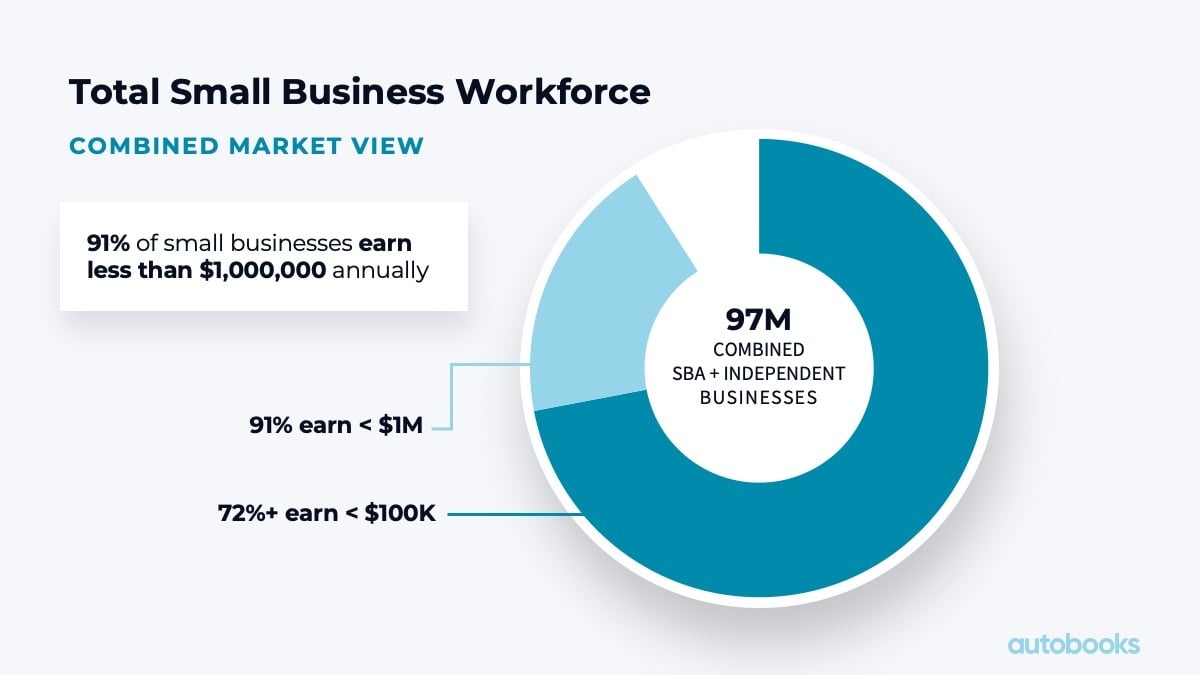 These businesses are real, viable, and growing. They just don’t fit into the frameworks we’ve historically used to define business banking relationships. They don’t need a relationship manager. They don’t have back-office staff. They often operate with the behaviors of a consumer, but the obligations of a business.
When it comes to their banking experience, they need to move money, accept payments, and track what’s coming in and going out. But few banks have tailored business checking products or a digital banking experience to meet these needs directly.
This misalignment is visible in how small businesses manage their finances today. Most still rely on spreadsheets and downloaded bank statements to manage their business. You may be surprised to learn that fewer than ten percent use modern cloud-based accounting software. For those that use fintech tools, they are mostly cobbled together workflows that work outside of the financial institution.
Many are struggling. According to data shared in the webinar:
- 45 percent of small business owners have foregone a paycheck due to cash flow issues.
- Twenty-two percent struggle to pay essential bills.
- Nearly seventy percent have less than four months of reserves.
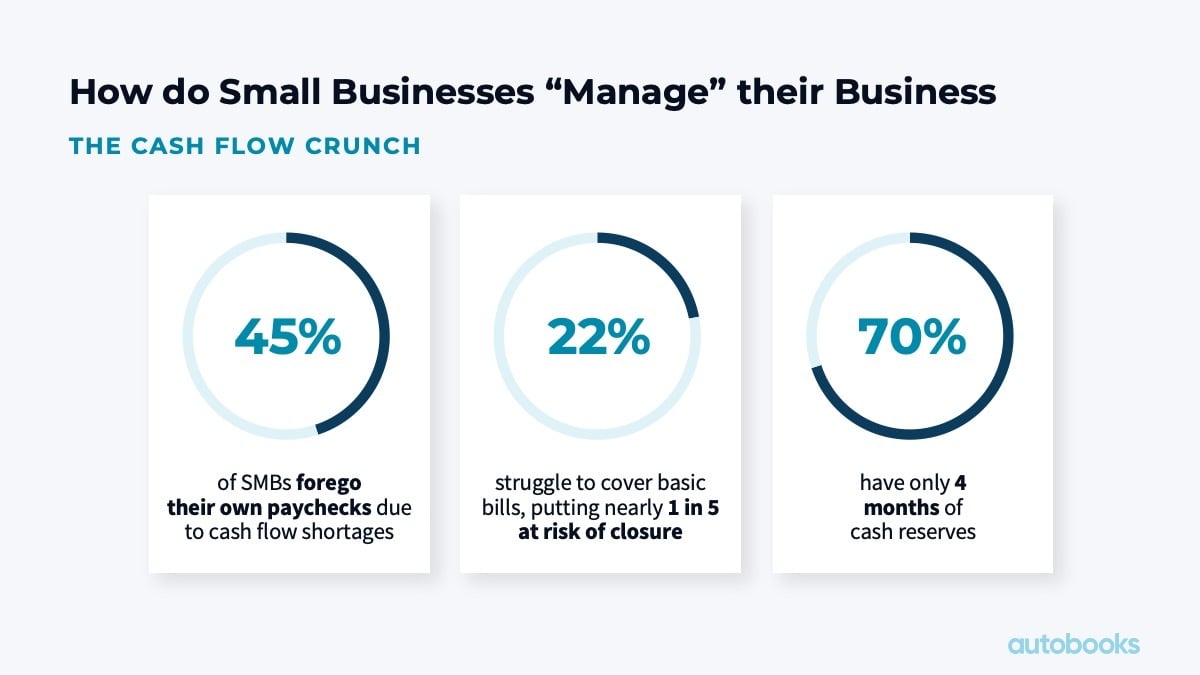
These aren’t edge cases. They are the mainstream of small business today.
Financial institutions don’t need to replace their existing business offerings. But they do need to recognize the opportunity to serve this lower-revenue segment with smarter, more accessible solutions. Most small businesses are not asking for more complexity. They’re looking for simplicity, visibility, and control.
They don’t want to leave their bank. But many have already begun using third-party tools to fill the gaps. According to webinar data, 65 percent of small businesses currently rely on fintech tools outside of their primary bank or credit union. However, 81 percent say they would prefer to get those tools directly from their financial institution if available.
This is the inflection point. Financial institutions have the trust and the reach. But the product must match the customer. And today, most business checking accounts still reflect a customer profile that makes up less than ten percent of the market.
It’s time to reframe the opportunity. If most business customers earn less than $1 million, then designing around their needs is not niche. It is essential.
Financial institutions that take this seriously will be better positioned to attract and retain the next generation of business customers. And they will be doing so with products that reflect how businesses operate today.
Stay Tuned for Part 2: Designing a Better Small Business Offering |
Frequently asked questions
What does 'the market we built it for' actually mean?
Most business banking products were designed around mid-market or larger commercial clients — companies with dedicated finance staff and seven-figure revenue. Those assumptions were carried forward into today's business checking products, but the market shifted without the product catching up.
How big is the under-$1M segment?
91% of U.S. businesses earn under $1M in annual revenue, and 72% earn under $100K. When you include independent workers, freelancers, and gig operators, the segment is substantial and growing.
Why don't these businesses use accounting software?
Fewer than 10% use modern cloud-based accounting software. Most still run on spreadsheets and downloaded bank statements, or piece together fintech tools that operate outside of their bank.
If businesses are already using fintech tools, is the bank relationship lost?
No. 81% say they would prefer to get those tools from their financial institution. The trust is still at the bank — the functionality isn't. Close that gap and the relationship deepens instead of migrating.
What's the inflection point?
The product set still assumes a customer that represents less than 10% of the market. Re-designing around the actual customer base turns an underserved segment into a growth engine.